
Future Skills: More than Technical Know-How
E³UDRES² and EULiST take centre stage at joint event by connecting technical, artistic, and social perspectives.
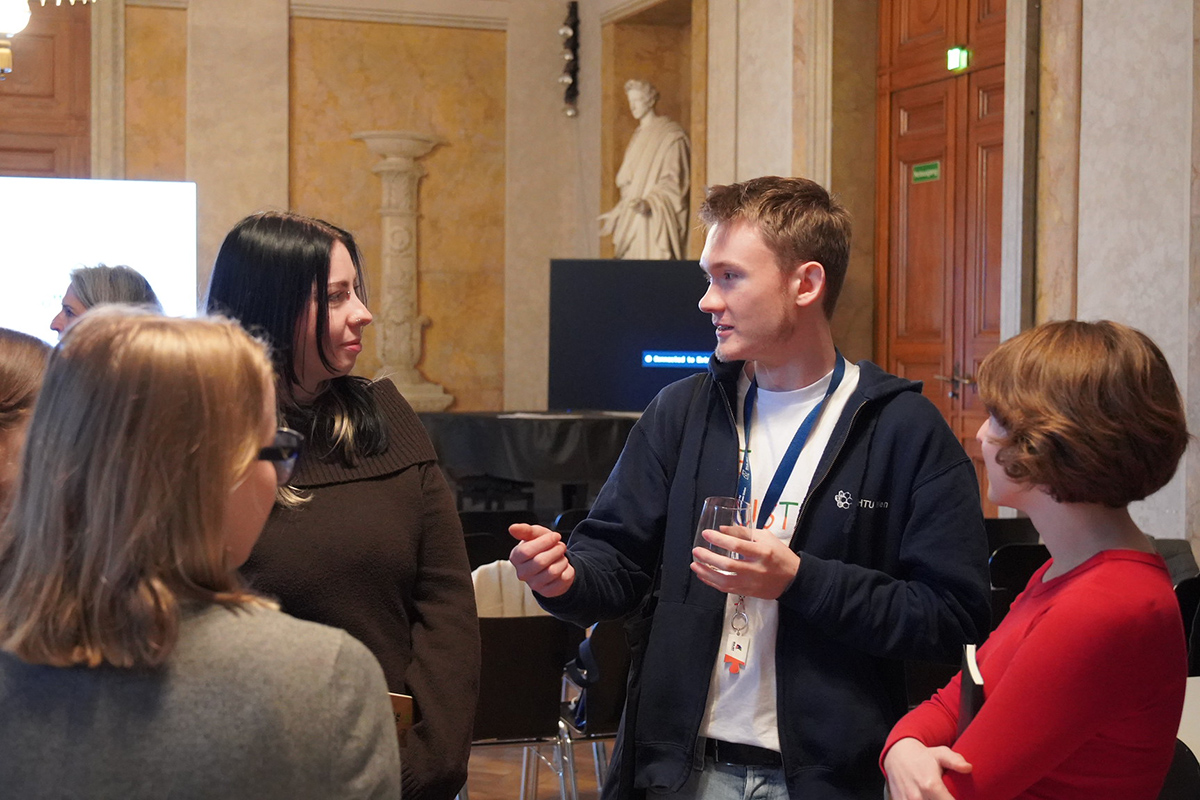
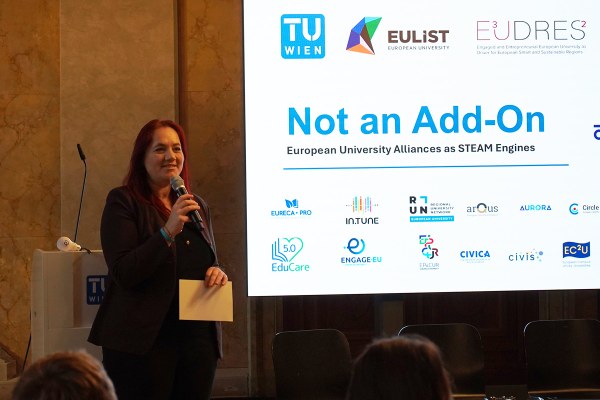
On 11 November 2026, the European University Alliances E³UDRES² and EULiST hosted the event “Kein Add-On: Europäische Hochschulallianzen als STEAM Motoren” (no add-on: European University Alliances as STEAM engines) at TU Wien. The two alliances are coordinated by USTP – University of Applied Sciences St. Pölten and TU Wien, respectively. Representatives of Austrian European University Alliances, students, and political decisionmakers discussed how interdisciplinary education is preparing students for a changing world. Next to technological know-how, the focus was on critical thinking, creativity, communication skills, and social responsibility.
From STEM to STEAM
The STEAM approach expands Science, Technology, Engineering, and Mathematics (STEM) to include Arts, Humanities, and Social Sciences. It combines disciplines of the natural sciences and technology with perspectives of the arts, humanities, and social sciences.
To tackle challenges such as climate change and digital transformation, we need not only specialist knowledge but also an understanding of social, cultural, and ethical contexts. Interdisciplinary learning enables different perspectives and strengthens skills for working life and participation in society.
 Credit: Luna Moser
European University Alliances as Pulse Generators
Through cross-border collaboration, innovative learning formats, and links with regional ecosystems, European University Alliances open up new opportunities for students, researchers, and lecturers.
The exchange highlighted the importance of continued collaboration across disciplinary and institutional boundaries: Together, the alliances can promote future-oriented skills and further develop innovative, inclusive approaches to learning, teaching, and social engagement.
E³UDRES² brings together education, innovation, and society to enable students to become actively involved in shaping the future. Together with their European partner institutions, USTP introduces these perspectives into teaching, research, innovation, and everyday university life.
