
6 Years E³UDRES² : Strengthening Regions Together
Almost 20,000 students and citizens have become involved in the university alliance since 2020.
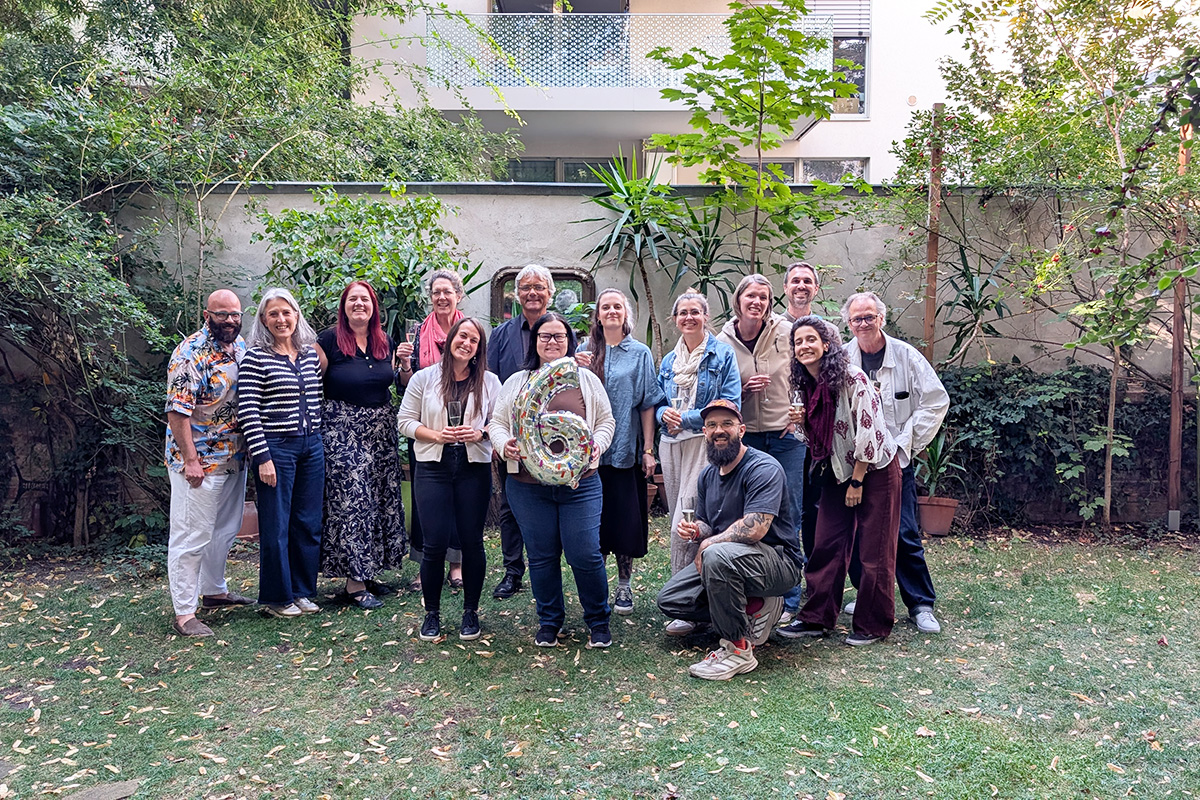
For six years now, the European University Alliance E³UDRES² has been connecting higher education institutions from nine European countries to pool knowledge, talents, and ideas. What started as a cooperation of European universities in 2020 now offers concrete opportunities for students, researchers, and regional partners: by way of international educational programmes, joint research, new innovation formats, and the exchange of expertise across borders.
Nine Institutions, Joint Impact
In E³UDRES², nine higher education institutions from Austria, Belgium, Germany, Finland, Portugal, Hungary, Romania, Latvia, and the Netherlands are working together on the challenges faced by their regions. The alliance is coordinated by USTP – University of Applied Sciences St. Pölten, the only university of applied sciences in Austria to hold such a role in a European University Alliance.
Taking stock after the first six years: 9,800 students took part in E³UDRES² activities and programmes, while 9,850 citizens got involved in the alliance’s initiatives. As part of these activities, more than 200 potential solutions to regional challenges were developed. Many of these ideas were subsequently followed up on and pursued at a local level.
Regionally Anchored, Connected across Europe
In Lower Austria, USTP has already carried out projects with Natur im Garten, DIE GARTEN TULLN, the Festspielhaus St. Pölten, Cinema Paradiso, Cloudflight, and the Guntramsdorf Cylinder Engraving Works. This European collaboration gives regional partners access to international expertise and further opportunities for cooperation.
At hackathons and bootcamps, international teams tackle challenges from the participating regions. In doing so, university staff collaborate with stakeholders from business, public administration, and civil society. This combination of regional engagement and European networking encapsulates the guiding principle “local pulse. global waves”.
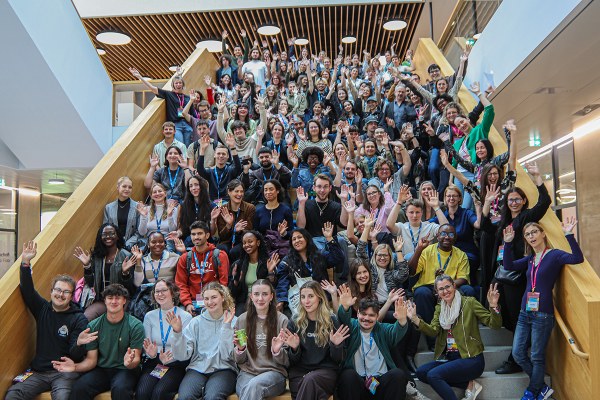 International Students at Intensive I Living Lab at USTP. Credit: E³UDRES²
“E³UDRES² shows the potential that can be realised when regionally anchored higher education institutions adopt a European mindset and act together. Rather than just sharing knowledge, our mission is to actively help shape European regions – by connecting talents, facilitating innovation, and developing answers to challenges faced by society. This is how we come up with new ideas and solutions that have a local impact and contribute to a common European future at the same time”, says Hannes Raffaseder, CEO of USTP and President of the E³UDRES² Alliance.
European Collaboration in Day-to-Day Studying and Research
An important step towards establishing E³UDRES² on a long-term basis was the founding of its own umbrella organisation in 2022. Since then, joint activities in teaching, research, innovation, and knowledge transfer have been continuously expanded. In addition to hackathons and bootcamps, the Live Lecture Days, for example, open up cross-border learning spaces in which researchers and lecturers share their expertise in free online lectures. The first Joint Master programmes, which began in 2026, also bring the European dimension to life in everyday student life.
Over the coming years, E³UDRES² is to be systematically expanded in order to harness its potential even more fully. Plans include additional joint study programmes, the establishment of research centres, new innovation formats, and even closer involvement of students and stakeholders from the regions.
“Over the past six years, we have laid the foundations for a common European area of education, research, and innovation. The results are already evident today: Students are studying across national borders in Joint Master programmes, and international teams are developing solutions to issues affecting our regions at hackathons. The task now is to further deepen this cooperation and open up new opportunities for students, researchers, and our regions”, says Gabriele Permoser, Managing Director of E³UDRES².
