
How do people make decisions?
And what actually happens in the mind when they do? These are the questions explored by junior researcher Martin Ernst.
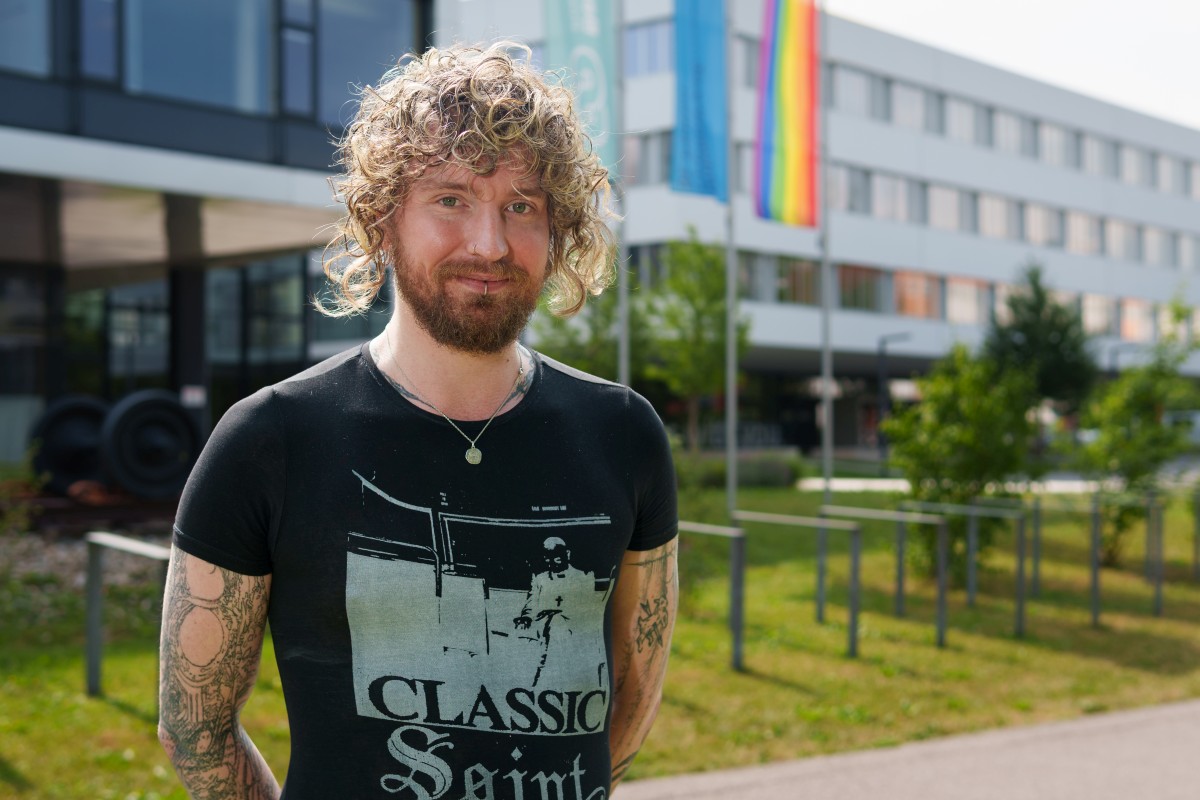
These are the questions explored by Martin Ernst, Junior Researcher at the Center for Digital Health and Social Innovation at USTP – University of Applied Sciences St. Pölten.
Martin Ernst’s work focuses on how people imagine situations, how they arrive at decisions, and how digital technologies can make these processes visible, support them, or even change them.
Interdisciplinary Research
Ernst’s research lies at the intersection of cognitive neuroscience, psychological decision-making research, and digital health. Ernst investigates how people mentally simulate complex situations and how they make moral, social, or health-related decisions.
Extended Reality (XR) in Healthcare
At the CDHSI, Ernst works on interdisciplinary digital health projects, including XR-based training, participatory technology development, nursing and health education, and social innovation.
“What particularly interests me is how digital interventions can be designed not only to function technically, but also to be psychologically meaningful, ethically sound, and appropriate for specific application contexts,” says Ernst.
Ernst is currently also writing a doctoral dissertation on moral decision-making and mental imagery. Ernst’s research examines, for example, how digital environments, imagined perspectives, and the vividness of mental scenes influence the decision-making processes that emerge from them.

Martin Ernst , MSc
Junior ResearcherCenter for Digital Health and Social Innovation
