Warm-up for NATO CCDCOE Cyber Defence Exercise
Locked Shields Partners’ Run 2026 at USTP
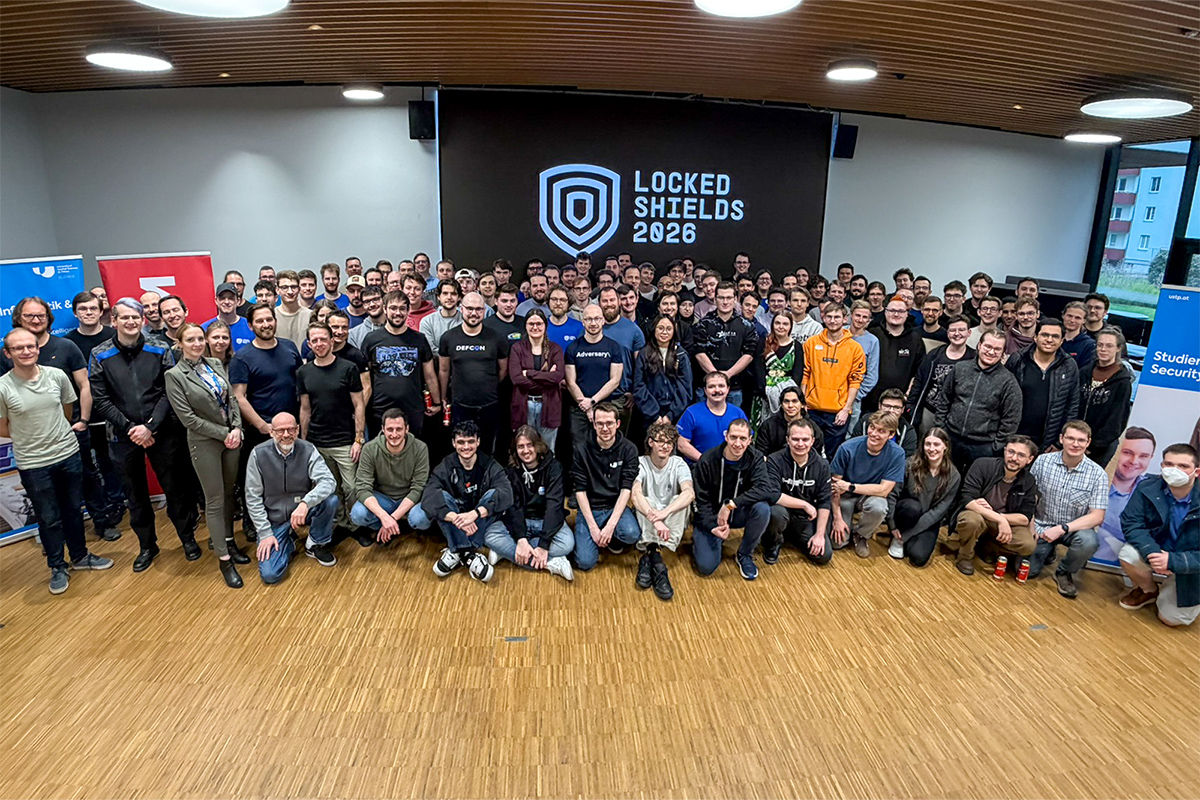
On 26 March, the exercise “Locked Shields Partners’ Run 2026” organised by the NATO Cooperative Cyber Defence Centre of Excellence (CCDCOE) came to an end. The exercise served as the main warm-up for “Locked Shields” – the world’s largest live-fire cyber defence exercise – and brought together experts from science, industry, and defence institutions in order to jointly train and test their cyber defence capabilities. USTP was part of it.
The NATO CCDCOE strengthens cooperation in the field of cyber defence ahead of the world’s largest live-fire cyber defence exercise. “Locked Shields is the most complex and demanding cyber defence exercise in the world, and it is designed for national teams. The ‘Partners’ Run’ gives companies, universities, and defence organisations the opportunity to work together and train their specialists in the same challenging setting in the fields of technology, law, strategic decision-making, and communication. To be successful in the Partners’ Run, an institution must show a strong performance in all of these fields”, explains Dan Ungureanu, Exercise Instructor of Locked Shields 2026.
This year’s Partners’ Run was the largest to date: Apart from USTP, another 15 teams also put their skills to the test. Among them were Adelaide University, Arvato Systems, Bitdefender, Ericsson, Estonian Defence League & University of Tartu, Kapsi Internet-users Association, a team made up of several Hungarian universities (BME, ELTE, NKE, ÓE, PTE, SZIE), Netherlands Defence Academy (NLDA), Polish Naval Academy, Siemens, TalTech, TechnoLogica, Telia Estonia, University of Valladolid & University of Zaragoza, and the Joint AI Research Team (armasuisse, CCDCOE, NLDA).
Defending Infrastructure against 6,000 Cyberattacks
During the exercise, the teams had to defend a simulated national infrastructure against roughly 6,000 cyberattacks. This year’s edition introduced several new elements including an extended cloud segment.
Next to improving their own capabilities, the participants directly contributed to the design of the exercise’s upcoming main run.
Networking between Science, Research, Education, and Businesses
The team of USTP successfully participated in the exercise once again. After last year’s strong interest, the team members were nearly twice as many this year – a development that made things easier in many respects but came with new challenges as well. In any case, the defined objectives were achieved – partly even surpassed. It turned out that the list of improvements continues to grow because IT security remains a discipline in constant change where it is decisive to stay up to date.
The experiences gained last year helped with the preparation but once again the team encountered unexpected situations that demanded fast action. The team consisted of a well-balanced mix of students, graduates, teachers, and business partners.
“Special thanks go out to the companies Cancom and ACP. When it comes to an exercise of this scale, it is particularly important to have diversified expert knowledge to fall back on. Thanks to our committed students, graduates, and partners from the industry, we were able to respond fast to even the most unexpected challenges”, emphasises Junior Researcher Stefan Machherndl, main organiser of the USTP team.
Simon Tjoa, Head of the Institute of IT Security Research, also stresses the meaning of collaboration: “The close networking between science, research, education, and business is a major concern of ours. Locked Shields demonstrated once again how precious this exchange is – and that we can compete easily at the international level.”
Cooperation for the Protection of Critical Infrastructure
“Locked Shields is a technologically very advanced exercise for which we have built critical infrastructure systems – our modern societies depend on the functioning of these systems, so this complex environment requires sound testing. We are very grateful to all our partners as we can use the insights derived here directly to improve the training environment for the national teams in the main run”, adds Ungureanu.
The main exercise “Locked Shields 2026” takes place in April and brings more than 4,000 cyber experts from more than 40 countries together to train the protection of critical infrastructures and military systems against cyberattacks.
NATO Cooperative Cyber Defence Centre of Excellence (CCDCOE)
The NATO Cooperative Cyber Defence Centre of Excellence (CCDCOE) is the leading hub for NATO members and like-minded nations to strengthen their cyber defence skills together. Headquartered in Tallinn (Estonia), the Centre unites 39 nations and conducts research work, trainings, and exercise – among them Locked Shields and Crossed Swords.

Dipl.-Ing. Stefan Machherndl , BSc
Junior Researcher Department of Computer Science and Security