
Breadcrumbs
- Media Technology
- Projects
- Link
Link
In the context of the European Project Semester (EPS) 2025, a group of international students developed a VR simulation game designed to support social work education.
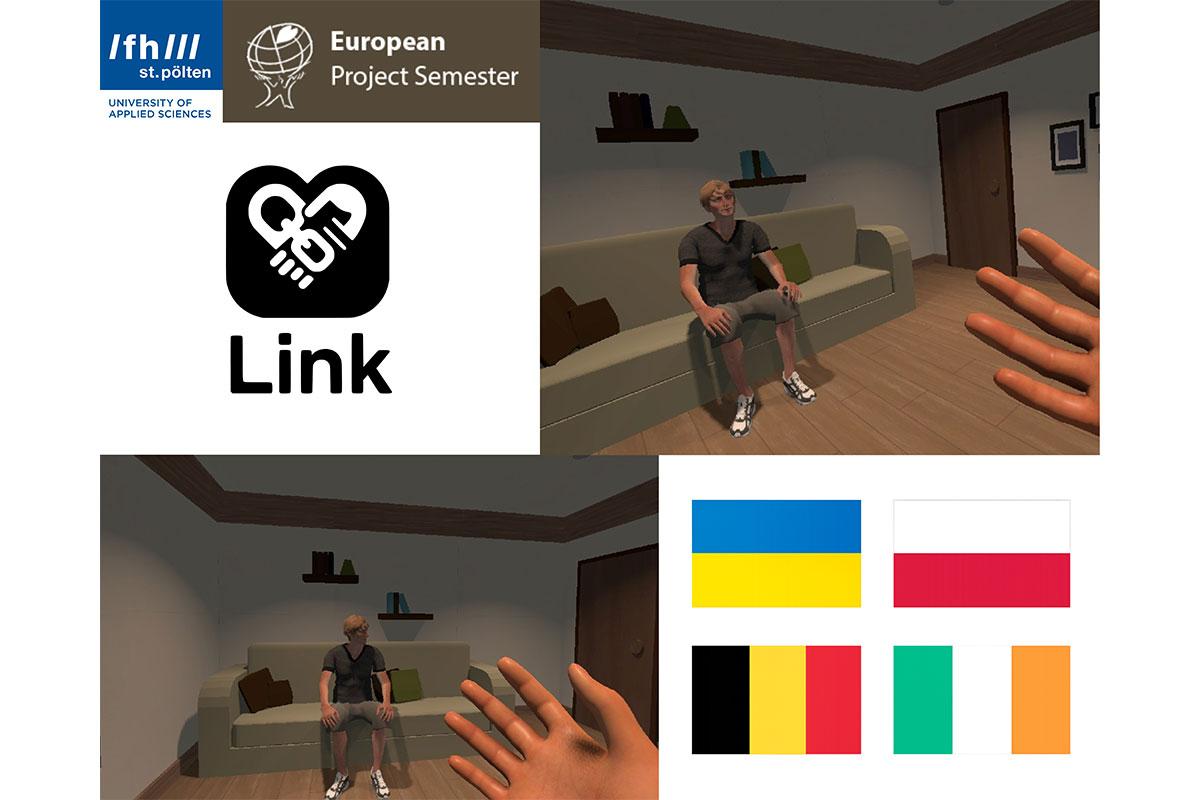
During the summer semester 2025, incoming students from various study programmes (Computer Sciences, Film Production) collaborated in a multidisciplinary team project. The goal was to develop a working prototype of an interactive application that could have real-world educational impact. One of the selected concepts was a VR experience aimed at students of social work.
Objective
The VR simulation was developed to support social work students in building practical communication skills through immersive roleplay. Set in a realistic crisis scenario, the game places the player in the role of a social worker engaged in a sensitive conversation with a young person who has been expelled from home due to his sexual orientation.
By guiding the player through emotionally intense dialogue choices, the game fosters essential soft skills such as empathy, emotional regulation, and active listening. The simulation is designed not as a test, but as a space to explore the nuances of human interaction in vulnerable situations—an area often difficult to simulate in traditional classroom settings.
Beyond skill development, the project aims to raise awareness of the challenges faced by marginalised youth. The scenario encourages players to reflect on their own assumptions and communication strategies, thereby creating opportunities for both professional growth and personal insight.
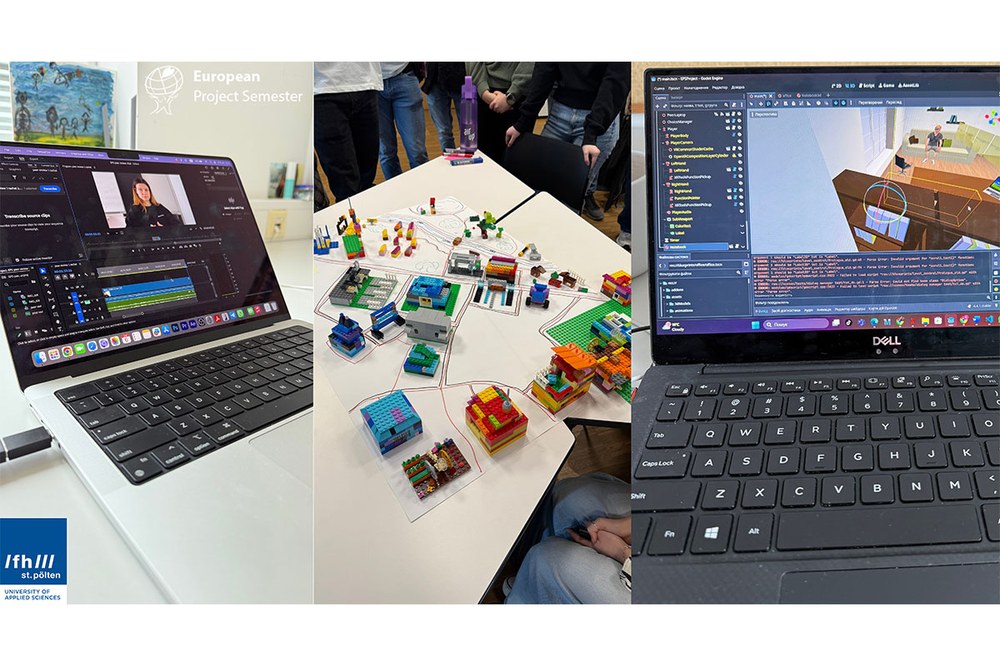
© XR Troopers, 2025
Project steps
To bring this idea to life, a team of international students with backgrounds in IT and film production collaborated on the design and development of the prototype. The work began with research and concept exploration, followed by interviews with students of social work to ensure that the storyline would reflect real-world experiences and needs.
The game was developed using the open-source Godot engine, selected for its adaptability and support for VR environments. The Scrum methodology was implemented to structure the workflow, with the team organising their tasks into iterative sprints. Tools such as Jira and GitLab were used to manage project tasks and code versions, while Miro supported collaborative planning and design.
Narrative writing played a central role throughout the process. Great care was taken to script dialogue that felt emotionally authentic while remaining flexible enough to allow for user choices. The character behaviour was designed to respond sensitively to the player’s words, creating a sense of realism in the exchange.
The prototype underwent internal playtesting as well as sessions with external users, including social work students and developers. These sessions provided crucial insights into usability, emotional impact, and player engagement. Feedback was carefully reviewed and led to refinements in both interaction design and scenario pacing.
The final version of the prototype offers an emotionally engaging, pedagogically relevant experience that can be integrated into classroom teaching or individual training. It demonstrates how digital storytelling and VR technology can be used not only to simulate action, but to cultivate human connection.
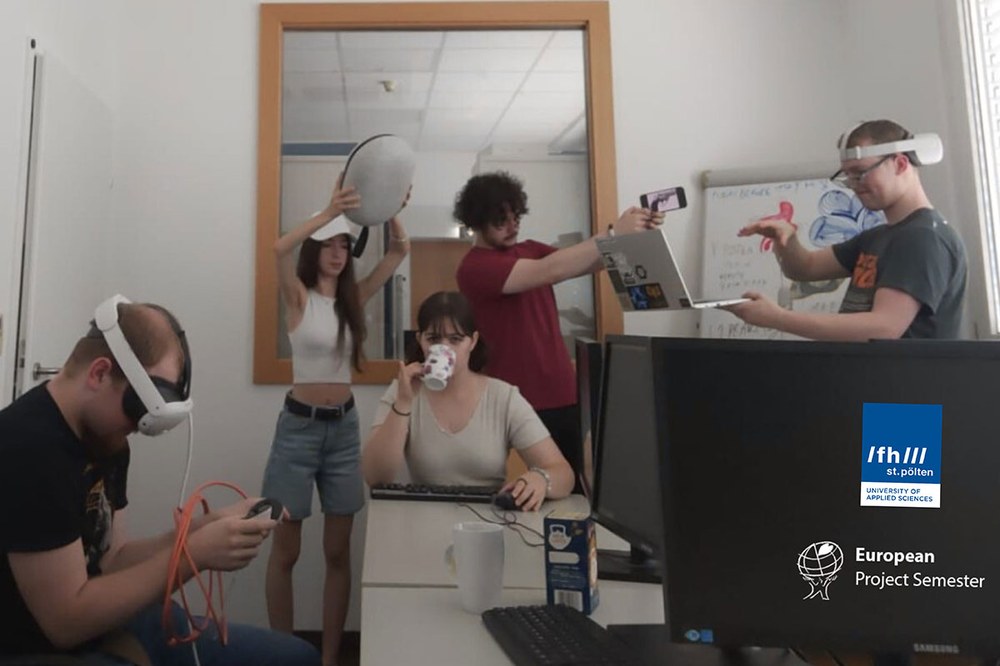
© XR Troopers, 2025
This project was carried out as part of the European Project Semester (EPS). The programme enables students to spend one semester working on a practice-oriented project at a partner university within an international and multidisciplinary team.
