
From Higher Education to Tech Industry
Which competencies are sought after in the tech industry? Three Creative Computing graduates share their experiences
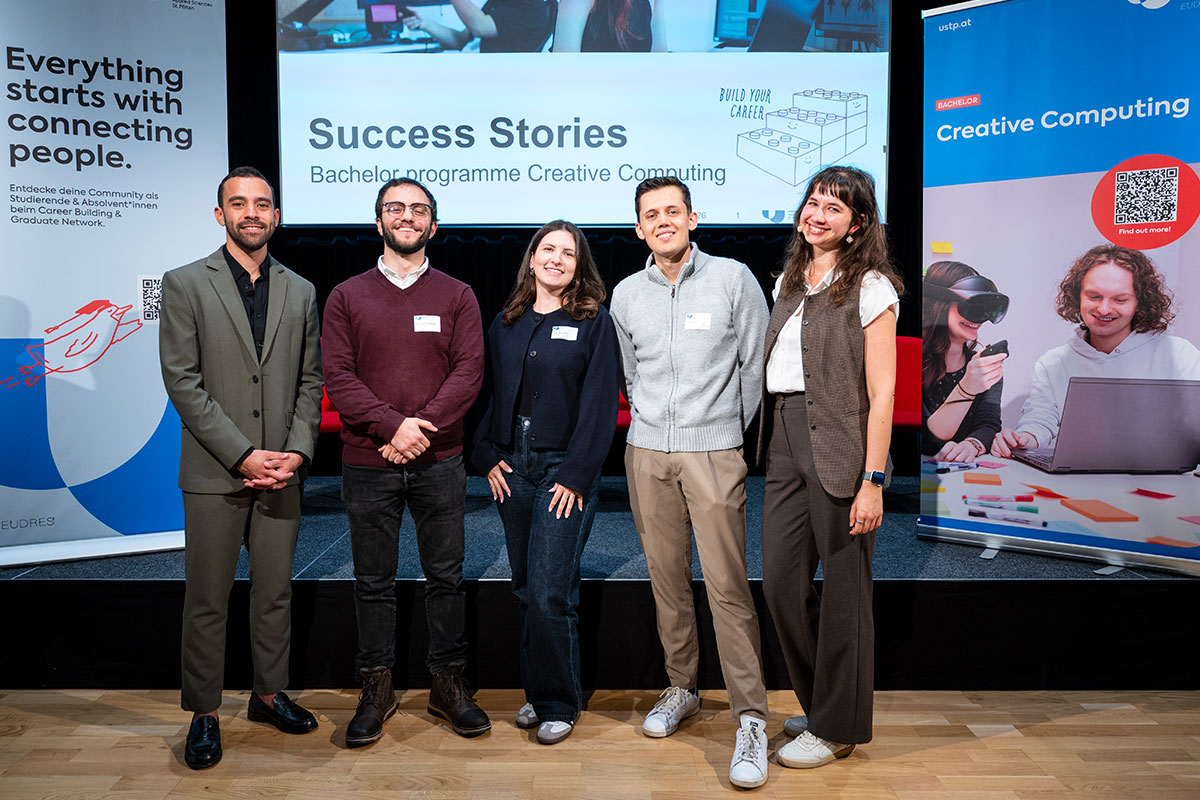
As part of the career.network, three graduates of Creative Computing discussed their path from higher education to practice for the section “Success Stories”: Elina Chebotayeva (Software Engineer at Dynatrace), Mohammed Al Hamadani (Data Science Engineer at REWE International AG), and Sebastian Tatar (DevOps Engineer at Neo Group).
The students in the audience had the opportunity to learn first hand which experiences facilitate the career start, which challenges await young developers, and which competencies are particularly sought after in today’s tech industry.
Technology that Takes Users into Account
All three alumni agreed that technical know-how is not enough these days. In a constantly evolving industry, it is mainly curiosity, the willingness to learn, and the ability to immerse oneself quickly in new topics that are in high demand. “Learn how to learn” was one of the central pieces of advice offered to the students.
According to the graduates, employers pay particular attention to how applicants respond to new challenges, feedback, and setbacks. And to whether they can explain technical concepts in a way that is easy to understand. In practice, developers regularly work with people who do not have a technical background. Those who can not only programme but also explain why and how a solution works possess an important skill.
The user-centred approach taught in the Creative Computing programme is a clear advantage over many purely technical degree programmes offered at other universities, the three experts said.
Projects and Portfolio Make the Difference
A recurring theme was projects undertaken outside of regular course work. From coding challenges and game jams to personal software projects or a personal portfolio website: Such initiatives demonstrate not only technical skill but also self-motivation and a genuine interest in the field.
When it comes to job applications, they are often more meaningful than academic achievements alone.
As for finding an internship place, Sebastian Tatar advises: „You need to have patience – it’s always key.”
Soft Skills and Friendships as Success Factors
In addition to technical expertise, social skills were also highlighted as crucial. Software development is teamwork: Those who can explain complex problems clearly, share knowledge, and collaborate with a variety of people possess key qualities for everyday professional life.
At the same time, the guests emphasised how valuable the friendships and networks they formed during their studies are. Many of these connections remain with them to this day, both professionally and personally. “If you want to go fast, go alone. If you want to go far, go together,” says Mohammed Al Hamadani.
Lifelong Learning
One topic that all three graduates discussed was what’s known as “impostor syndrome.” Especially when starting their careers, applying for jobs, or participating in coding challenges and game jams, many felt they were not good enough yet or that they needed to learn more first.
However, they encouraged the students not to let this hold them back, saying that: You’ll rarely feel 100 percent ready. What matters is seizing opportunities regardless and seeing potential setbacks as part of the learning process.
“You will never feel ready, but go for it. Avoid this trap and do coding challenges. That is very good for your CV and your career”, advises Elina Chebotayeva.
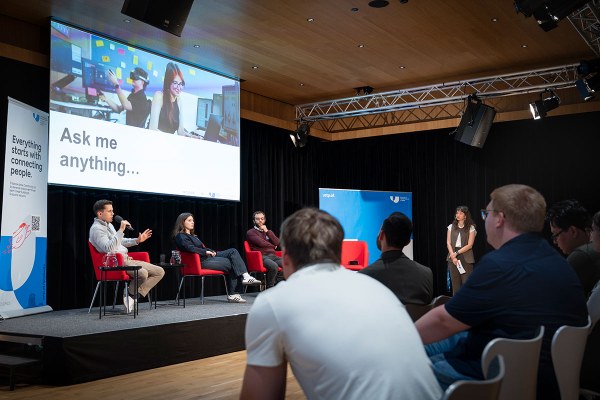 Valuable insights & practical tips for university and beyond | Copyright: Viola Voldrich
Exchange at Eye Level
A big thank you is due to all graduates who took the time to share their experiences with our students. The panel discussion showed once more how varied the potential career paths are for graduates of USTP – University of Applied Sciences St. Pölten and how valuable the exchange between alumni and students can be.
